
Fire doors are one of the most common sources of actions in a fire risk assessment, and for good reason. They are critical to protecting escape routes and containing the spread of fire and smoke, but they are also moving parts in a busy building. They take knocks, get propped open, lose seals and quietly fall out of compliance between assessments.
If you are the Responsible Person for a building, or you manage compliance across a portfolio, it helps to know exactly what a fire risk assessor will check, why fire doors so often end up on the action list, and what a strong fire door maintenance approach actually looks like.
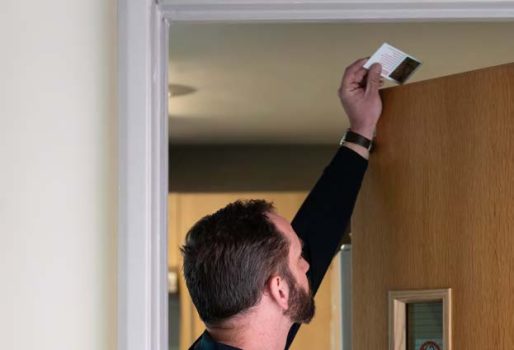
A fire risk assessor will not usually inspect every fire door in detail. In most buildings, they will review a sample of doors, particularly those on escape routes, and carry out visual checks. They are looking for clearly visible faults or signs that doors may not perform as intended in a fire.
That includes:
If visible issues are found, they will be recorded in the fire risk assessment as actions or recommendations.
The assessor will also usually ask whether routine fire door checks are being carried out and whether inspection and maintenance records are available. They want to see evidence that doors are being looked at on a planned basis by a competent person, not only when problems become obvious.
A fire risk assessment is not the same as a full fire door survey, and that distinction matters.
Unless the building is very small, a fire risk assessor is unlikely to inspect every fire door in detail. That is why a common action arising from an FRA, where issues with fire doors are flagged, is a recommendation to commission a full fire door survey. A dedicated survey assesses each door individually, identifies defects in a structured way, and produces the schedule of works needed to bring doors back into compliance.
If your FRA includes fire doors as an action, a fire door survey is usually the right next step before any remedial work begins.
In most cases, fire doors become an FRA action because maintenance is fragmented.
The pattern is familiar: an inspection identifies defects, the report is too vague to support a clear repair, responsibility for action is unclear, the defects remain unresolved, and the same issues reappear at the next review. Multiply that across a portfolio and the action list grows rather than shrinks.
That is where a repairs-first approach makes the difference. Neo’s model is built around detailed surveys, compliant repair options, digital records and directly delivered quality-assured works. Smaller defects get resolved before they become bigger compliance and cost issues, and the same problems do not keep showing up year after year.
In practical terms, that means not defaulting to replacement where a compliant repair is appropriate. It means understanding the building’s fire strategy, the door type, the certification evidence available, and the repair options that can return a doorset to its rated performance.
In England, the Responsible Person has a legal duty under the Regulatory Reform (Fire Safety) Order 2005 to ensure fire precautions, including fire doors, are kept in an efficient state, in efficient working order and in good repair.
In practice, that means fire doors must be:
For multi-occupied residential buildings over 11 metres in height, the Fire Safety (England) Regulations 2022 add specific duties. The Responsible Person must:
If you manage residential blocks, your fire door inspection regime needs to demonstrate that these checks are happening, not just that they are scheduled.
The aim is not to look good for an assessor. It is to maintain fire doors properly all year round, so that the next assessment reflects a building that is genuinely safer and better controlled.
A stronger fire door maintenance approach usually includes five things.
Fire doors do not sit in isolation. They should be reviewed in the context of the fire risk assessment, compartmentation plans and the wider fire strategy for the building. Neo’s repairs-first model starts with those documents, so survey and repair decisions align with the building’s actual risk profile and the rated performance each door is required to deliver.
A pass/fail list is not enough. If the output from an inspection does not clearly identify the defect, the likely remedial requirement and the door’s location, the route from finding the problem to fixing it becomes slow and uncertain.
Best practice now leans heavily on app-based surveys, digital floor plans, photographic evidence, certification records and detailed remediation specifications. Anything less, and defects tend to sit in spreadsheets rather than get resolved.
Selecting competent contractors is critical. Clients need organisations with the right resources, supervision, systems and individual competence to carry out fire door works properly. The risk with poor contractor selection is simple: bad repairs, poor records, repeat defects and potentially non-compliant outcomes.
Not every defective door needs replacing. Neo’s experience across thousands of doors is that many can be repaired, often faster and at lower cost, when the right expertise is brought in early. That helps extend asset life, reduce capital spend and minimise disruption across occupied buildings, particularly in social housing and education settings where access to flats and classrooms needs careful planning.
If records are hard to find, incomplete or inconsistent, then even completed works can fail to provide real assurance to an assessor. Look for suppliers who provide digital surveys, QR code tagging, inspection history, maintenance records and secure cloud-based information management, so you have traceable, accessible evidence across the building lifecycle.
There is no single statutory inspection frequency for all buildings, but for multi-occupied residential buildings over 11 metres, the Fire Safety (England) Regulations 2022 require flat entrance doors to be checked at least annually and communal fire doors at least every three months. For other buildings, inspection frequency should reflect the building’s risk profile, occupancy and the condition of the doorsets, and is typically at least annual.
The Responsible Person under the Regulatory Reform (Fire Safety) Order 2005 is legally accountable for fire door maintenance in non-domestic premises and the common parts of multi-occupied residential buildings. That is usually the employer, building owner, landlord, or the person with control of the premises.
Many fire doors can be repaired rather than replaced, provided the repair is compliant with the door’s certification and the repair is carried out by a competent contractor. Replacement is the right answer where the door leaf or frame is structurally compromised, where the fire-resisting core is damaged, or where the door was never the correct specification for its location.
As a minimum, keep a record of fire door inspections, the date of each inspection, the person who carried it out, the defects identified, the remedial works completed, and any certification or product information for replacement doors. Digital records linked to floor plans and photographs are increasingly the expected standard.
A fire risk assessor should not be the first person to tell you your fire doors are not being maintained properly.
If your current approach relies on periodic inspections but does not consistently turn findings into competent repairs, clear records and long-term control, there is a gap in the strategy. A repairs-first model helps close that gap.
For organisations responsible for multiple sites, the question is not whether fire doors will deteriorate. They will. The real question is whether your maintenance approach identifies issues early enough, resolves them properly, and gives you the evidence to show they have been dealt with.
That is what reduces actions, improves safety and keeps buildings moving.
Talk to Neo about fire door surveys and repairs
Neo carries out fire door surveys, repairs and replacements across social housing, education, healthcare and commercial buildings. If your last fire risk assessment flagged actions on fire doors, or you want to get ahead of the next one, get in touch to discuss a survey and repair programme that fits your portfolio.
Book a fire door survey | Request a fire risk assessment | Speak to the Neo team